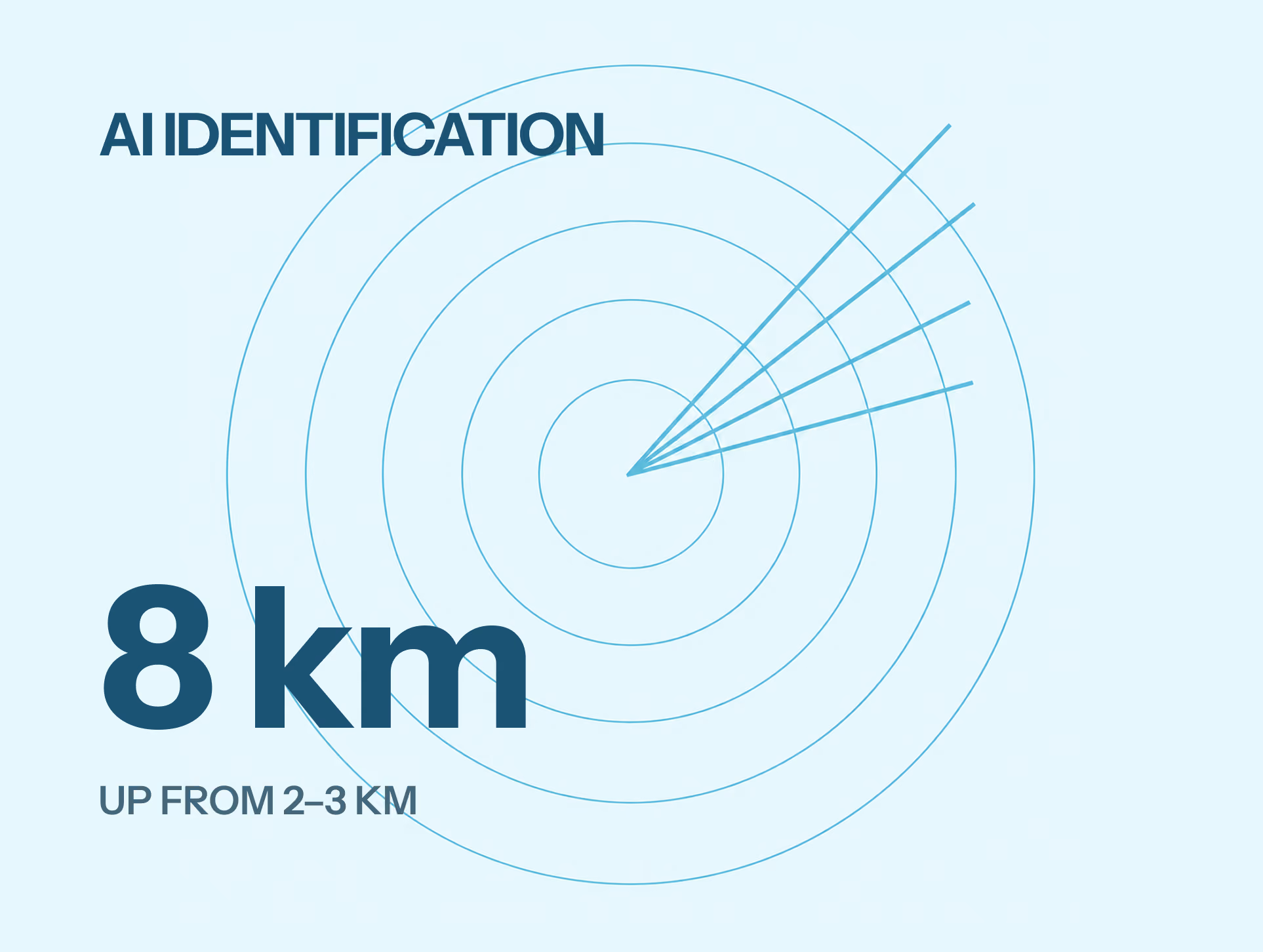
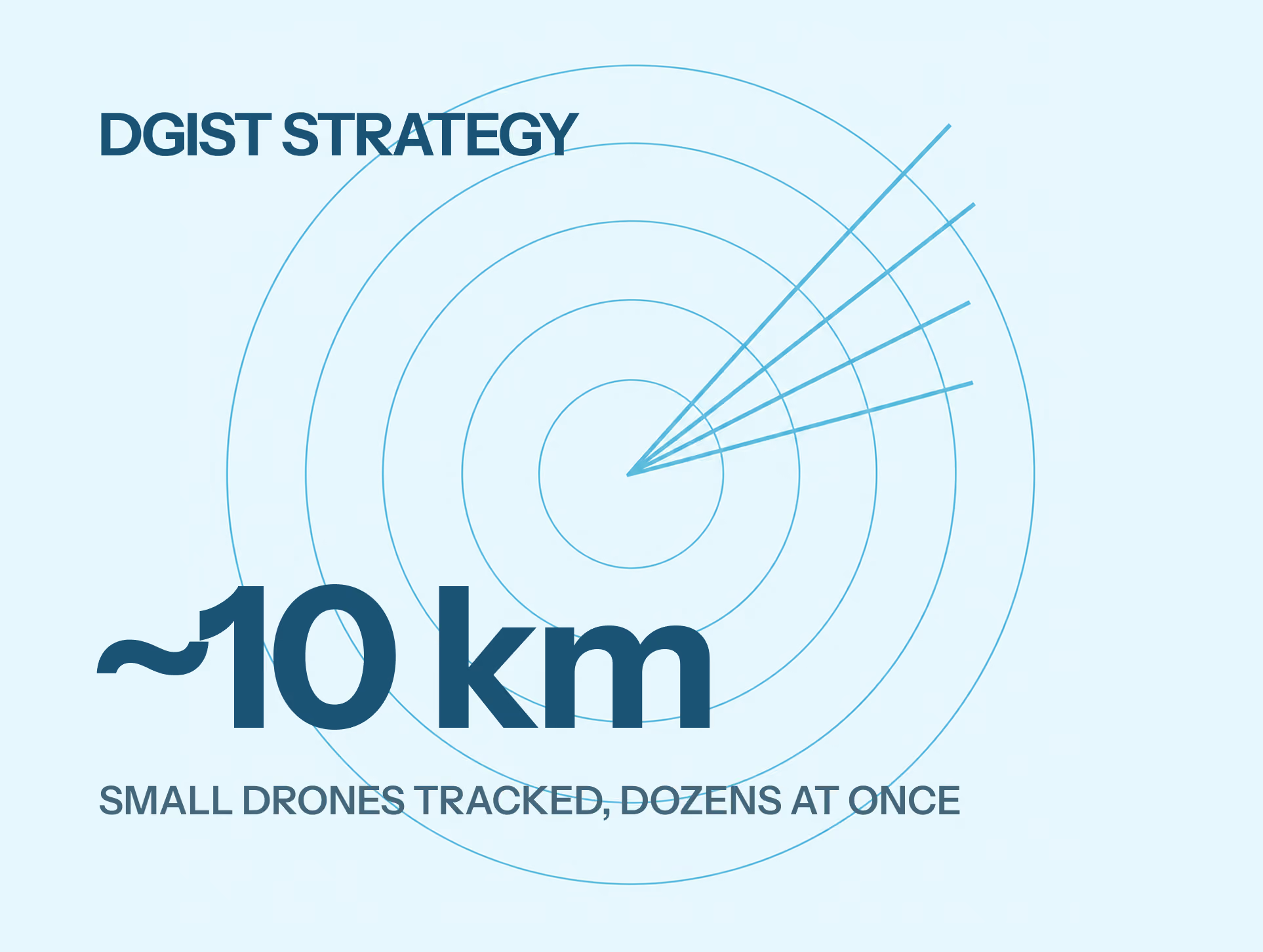
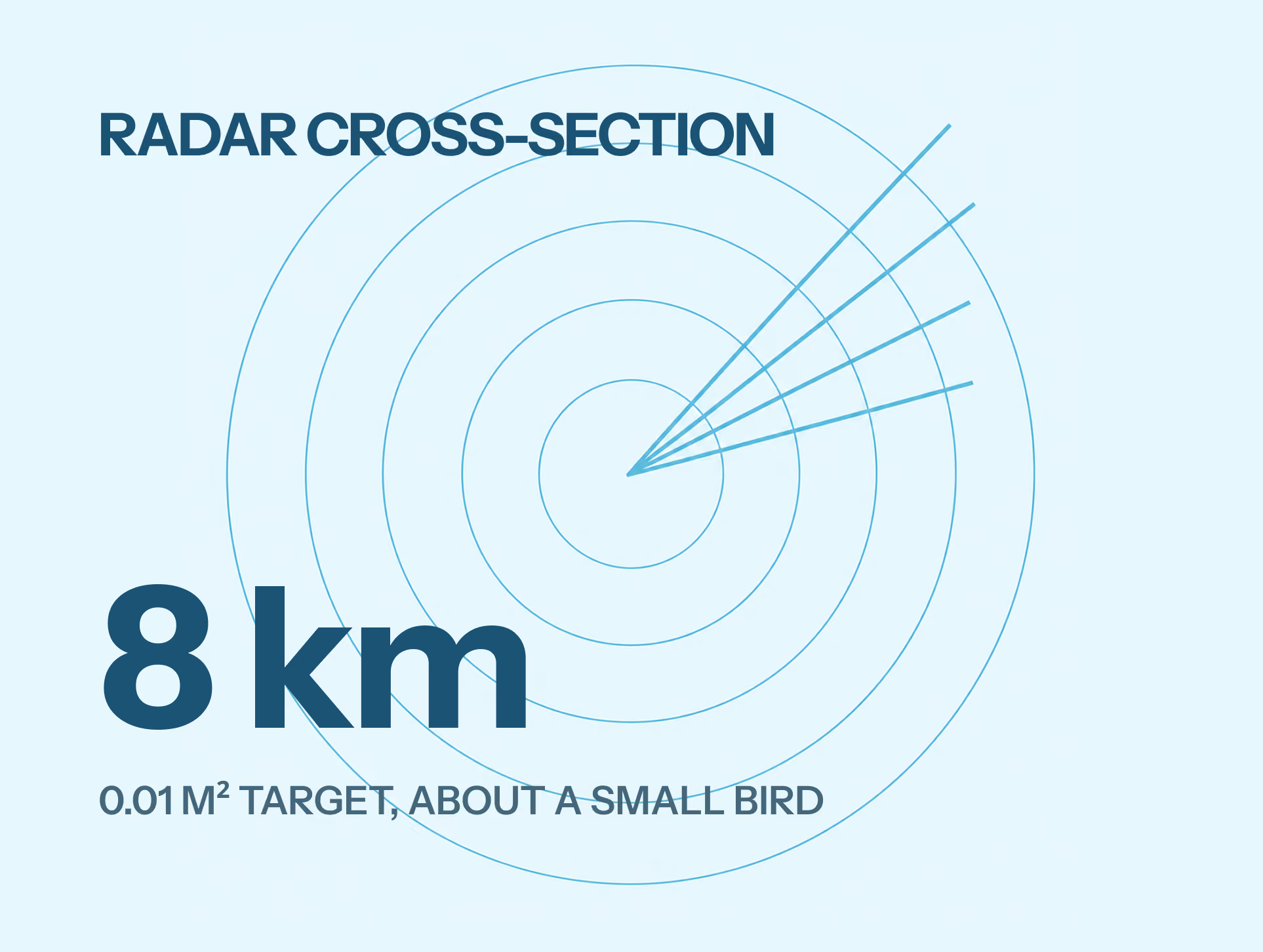
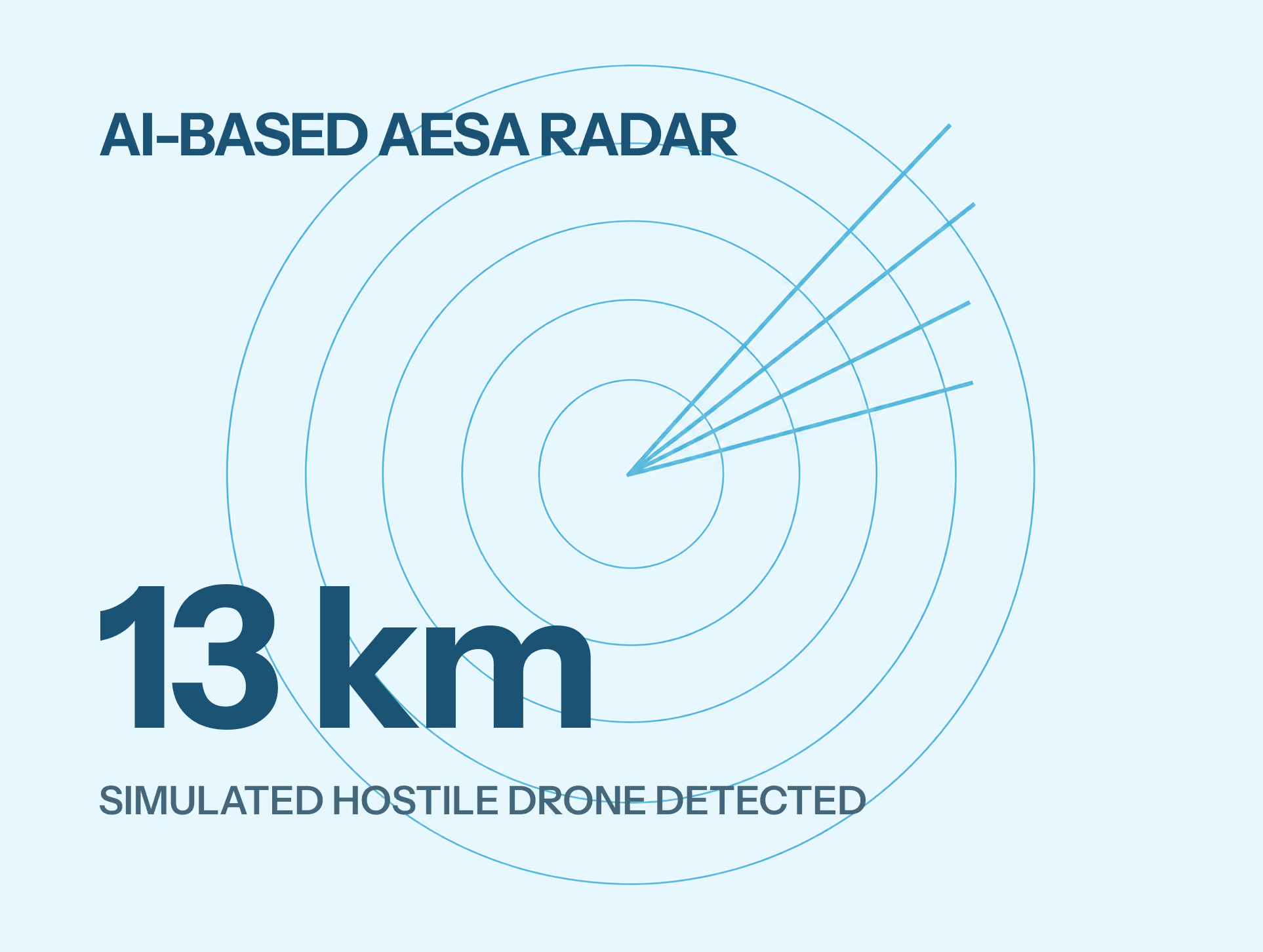
Radar display showing the detection of a small drone at an approximately 8-km range. Image: DGIST.
A research team led by Dr. Dae-gun Oh of DGIST’s Intelligent Robotics Research Division developed AESA drone-detection radar technology that was selected for DAPA’s rapid demonstration procurement project for an integrated radar-linked counter-drone solution.
The achievement was expected to be delivered to the Army, Navy and Air Force around June 2021 for six months of trial operation, contributing to the development of Korean military counter-drone defenses.
Launched for the first time in 2020, DAPA’s rapid demonstration initiative accepts innovative technologies from the private sector and rapidly introduces products employing Fourth Industrial Revolution technologies into the military.
The selected project aims to identify small hostile drones approaching key sites with radar and disable them by radio-frequency jamming.
In 2019, Oh’s team developed a domestic system detecting small Phantom drones at more than 3 kilometers. In early 2020, it demonstrated detection beyond 5 kilometers; subsequent tests detected a drone such as the Matrice 600 at up to 8 kilometers.
The team further refined AESA technology to extend range and integrated multidimensional ultra-high-resolution radar signal processing to estimate a drone’s position and velocity accurately.
Dr. Oh established TORIS in 2020 as a DGIST researcher-founded start-up to commercialize the proprietary technology and participated in the rapid demonstration procurement project in cooperation with DGIST.
Oh said the achievement stemmed from cooperation among Korean companies and international research institutions, alongside support from the Ministry of Science and ICT and DGIST. He expressed determination to compete in an international drone-detection radar market then led by U.S., European and Israeli suppliers.